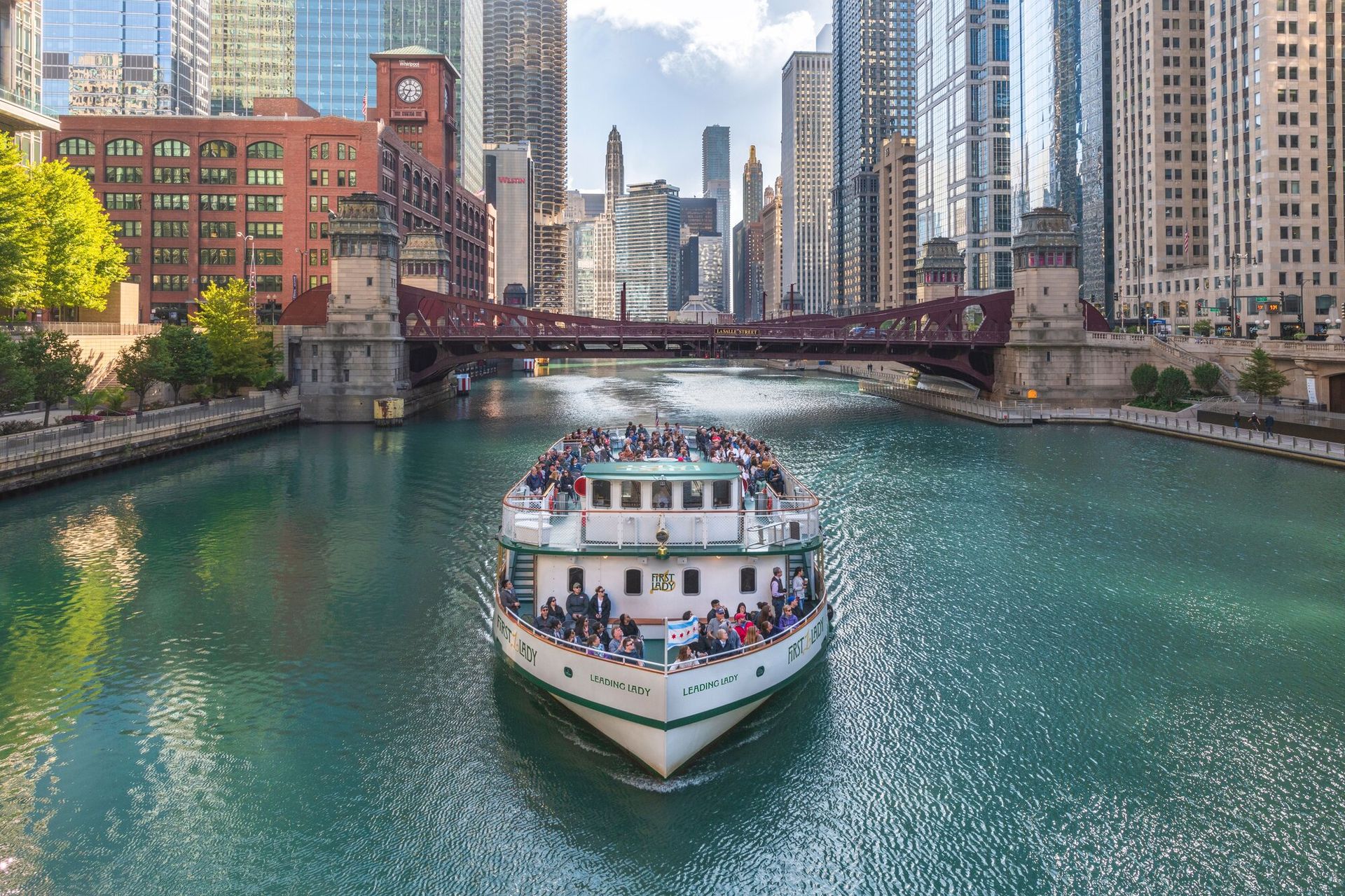
CAC River Cruise aboard First Lady
The cruise that puts Architecture First. Voted the #1 best boat tour in the United States by...

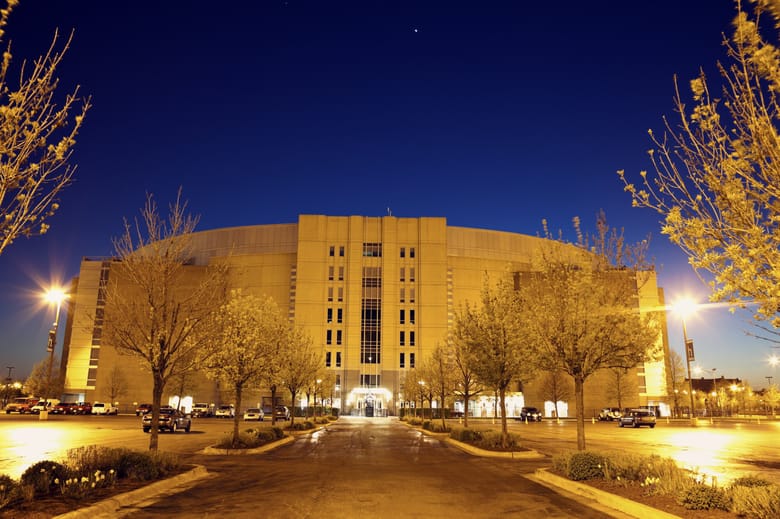
Photo: benkrut.
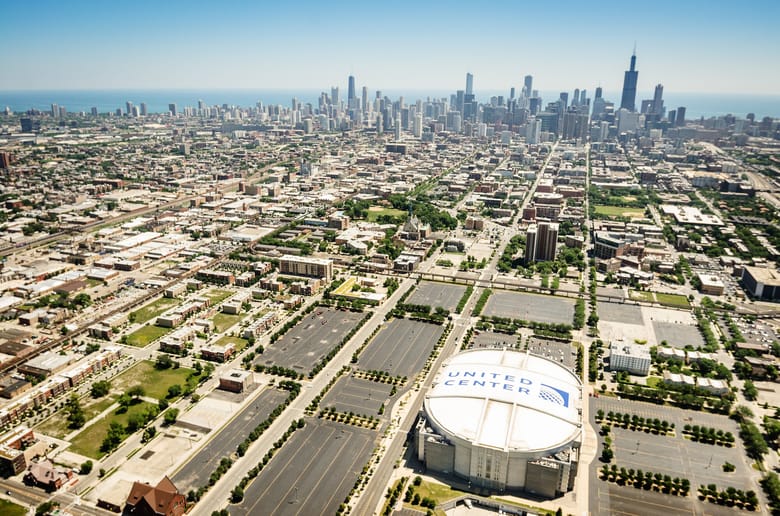
Photo: franckreporter.
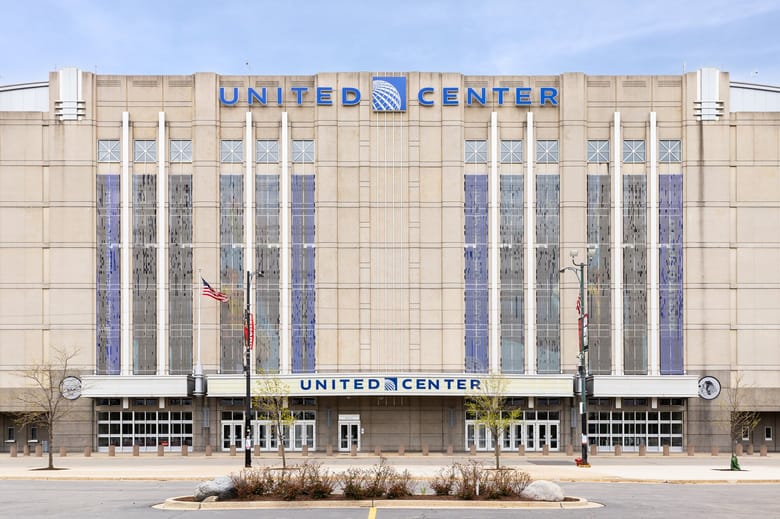
Photo: Joe Hendrickson.
A New Madhouse on Madison Street
When the United Center opened in 1994, it ushered Chicago sports into a new era. Built to replace the legendary Chicago Stadium across Madison Street, the arena became the new home of both the Chicago Bulls and the Chicago Blackhawks. Construction began in 1992 as part of a partnership between Bulls owner Jerry Reinsdorf and Blackhawks owner William Wirtz, who envisioned a venue capable of hosting major sporting events, concerts and large-scale entertainment well into the twenty-first century.
Designed for Scale
At 960,000 square feet, the United Center was among the largest arenas in the United States when it opened. The building was designed by HOK Sport (now Populous) in association with Marmon Mok and W.E. Simpson Company and engineered by Thornton Tomasetti.
Architecturally, the arena is defined less by height than by span and capacity. Its column-free interior combines a cast-in-place concrete seating bowl with a long-span structural steel roof, allowing more than 20,000 spectators to gather around a single event without obstructed views. The building was designed to accommodate a wide range of uses, from professional basketball and hockey to concerts, political conventions and family shows.
Looking Beyond the Arena
Today, the arena is at the center of a major transformation of Chicago's Near West Side. The 1901 Project, led by the Reinsdorf and Wirtz families, proposes converting more than 55 acres surrounding the arena into a mixed-use district with housing, retail, entertainment venues, a new CTA station, and public open space. If realized, the project would reshape the area from a landscape dominated by parking lots into a more connected urban neighborhood.
The United Center may lack the flourish of Chicago's iconic skyscrapers, but it occupies a critical place in the city's architectural story. Like the Chicago Stadium before it, the sports arena serves as an important civic gathering space, reflecting the city's long history as a thriving cultural center of the Midwest.

With 20,917 seats for basketball, the United Center is the largest arena in the NBA. When configured for concerts, it can accommodate up to 23,500 people.
The Blackhawks' ice sits beneath the Bulls' court, allowing the United Center to transform from hockey rink to basketball arena in about 2½ hours using a 50-person crew and more than 2,000 movable pieces.
The bronze statue of Michael Jordan is attached to its base at just one point—his knee. It was unveiled on November 1, 1994, the same day the Bulls retired Jordan's No. 23 jersey.
Between Bulls and Blackhawks games, concerts, family shows, college tournaments, political conventions and other events, the United Center hosts more than 200 events every year.
The life-sized bronze statues of two hockey greats—Bobby Hull and Stan Mikita—were unveiled in 2011 near Gate 3½, linking the United Center to Chicago's long hockey tradition.