Please contact Jorrie Jarrett with any questions or input on the content of this report.
###

Highlights from the CAC
July-September 2026
Highlights from the CAC
July-September 2026
As I reflect on an extraordinary season at the Chicago Architecture Center, I’m struck by the many ways our mission is coming to life across the city. We are bringing people together to experience Chicago, creating new spaces for connection, speaking up for our architectural heritage and helping more people understand how design inspires better living.
At this year’s international focal point of the architecture world — the Obama Presidential Center — we celebrated the CAC’s 60th anniversary during our annual Designing Futures Gala. Architects, designers, builders, policymakers, developers, philanthropists and civic leaders came together in September to support our education, youth engagement and public programs. Their generosity helps ensure that CAC can continue inspiring people to participate in shaping Chicago’s future.
CAC trustees, donors and docents explored architecture and design in Wisconsin during our annual board and leadership study trip. Highlights included a visit to the Studio Gang-designed Women’s Leadership Center at Williams Bay, where participants experienced firsthand how thoughtful design can shape spaces for leadership, learning and connection.
We’re also bringing Chicago architecture to audiences in new places. At O’Hare International Airport, we partnered with the Chicago Department of Aviation to install Icons of Chicago, a long-term exhibition in the Terminal 5 East Extension featuring CAC’s architectural models of Willis Tower, 875 North Michigan Avenue and Marina City. For millions of travelers passing through O’Hare, these iconic skyscrapers serve as a reminder of Chicago’s status as “the city of architecture.”
With the holiday season upon us, the CAC Design Store welcomes more than 10 new local vendors to the roster of 70 other makers and designers, with an expanded collection of handmade goods, books and objects. Increased holiday discounts for members, docents, volunteers and staff go into effect starting November 27!
Our growth this quarter extends to our leadership as well, and I invite you to join me in welcoming the Chicago Architecture Center's newest Trustee: artist and storyteller Hebru Brantley. Hebru’s creative vision, commitment to community and dedication to mentoring young people bring an exciting perspective to CAC and our work. Welcome to the Board, Hebru!
There is much to celebrate, and even more ahead. Thank you for being part of it.
Eleanor Esser Gorski, AIA
CEO & President
Chicago Architecture Center

Youth Education
2,625 participants across 105 programs

Adult Programs
293 participants across 5 programs

Development
$209K Individual giving, $7.5K Corporate giving, $93K Foundation, $644K Gala (cumulative) and $50K Government grants & pledges = $1M total

Volunteers
414 volunteers gave 5,944 hours of their time

Center Attendance
15,941 visitors

River Cruise
1,413 departures with 212,890 guests and $3.9M in revenue

Walking Tours
7,276 guests took 962 tours

Retail Sales
$233K in-store sales and $12K online sales with a 53% profit margin
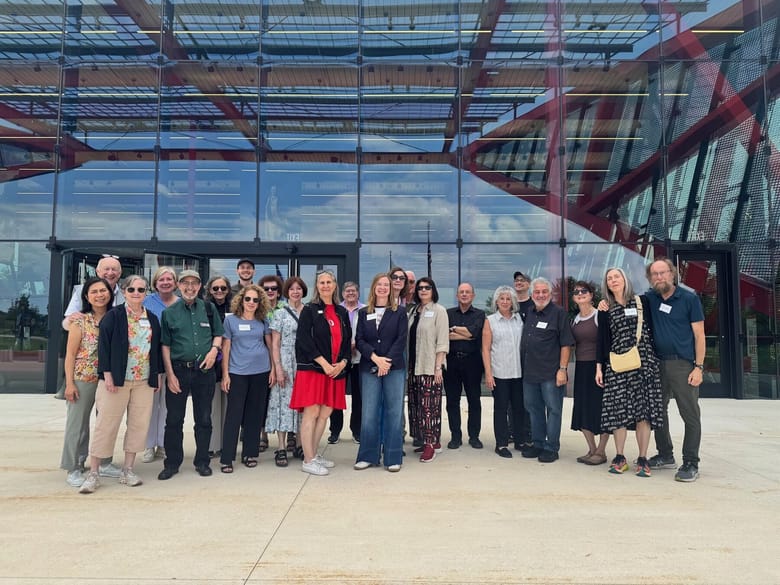
CAC trustees, donors and docents visit the Studio Gang-designed Women’s Leadership Center at Williams Bay during CAC’s annual Board and Leadership Study Trip.
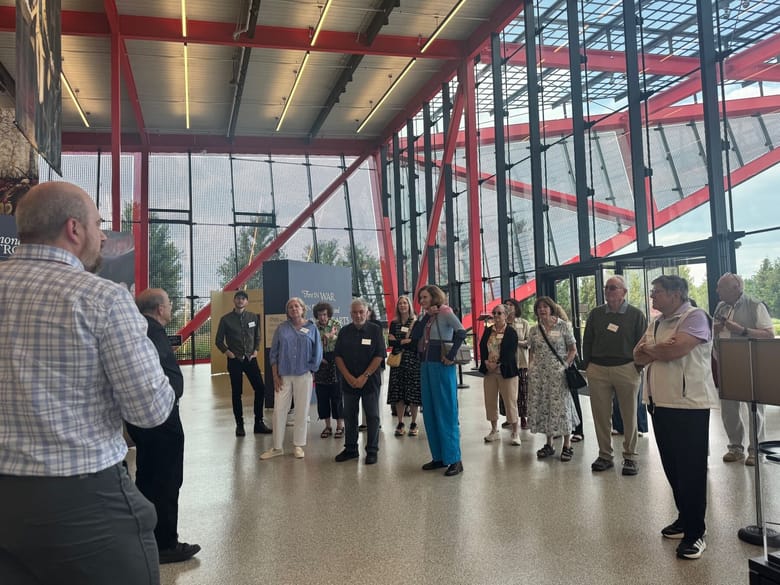
Exploring architecture and design in Wisconsin during CAC’s annual Board and Leadership Study Trip.
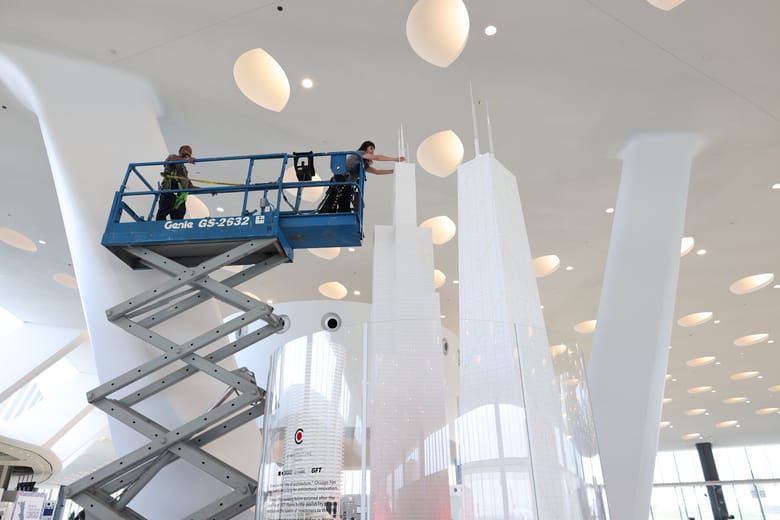
Eve Fineman, Senior Director of Exhibitions at the Chicago Architecture Center tops off the Willis Tower model in the “Icons of Chicago” exhibit, by adding its antenna.
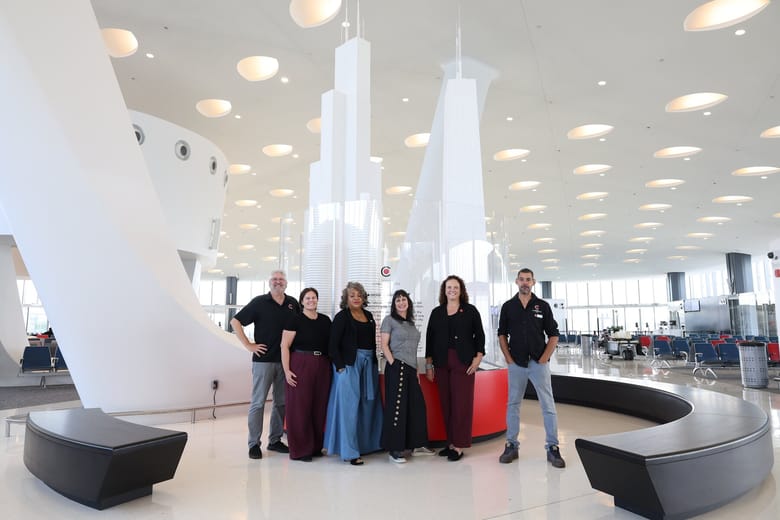
Chicago Architecture Center and Chicago Department of Aviation team members at the opening of the exhibition “Icons of Chicago” in Terminal 5 at O’Hare International Airport.
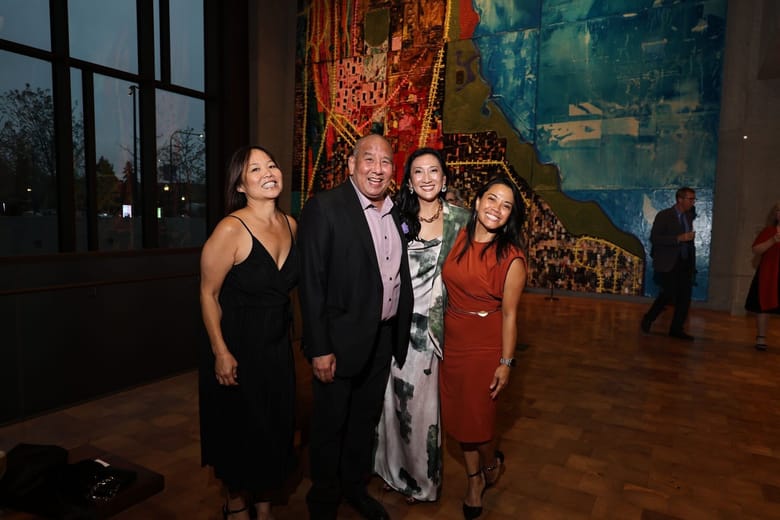
Lynn J. Osmond Legacy Award recipient Ernie Wong, Founding Principal and President of site design group, ltd. and friends at the Designing Futures Gala 2026.
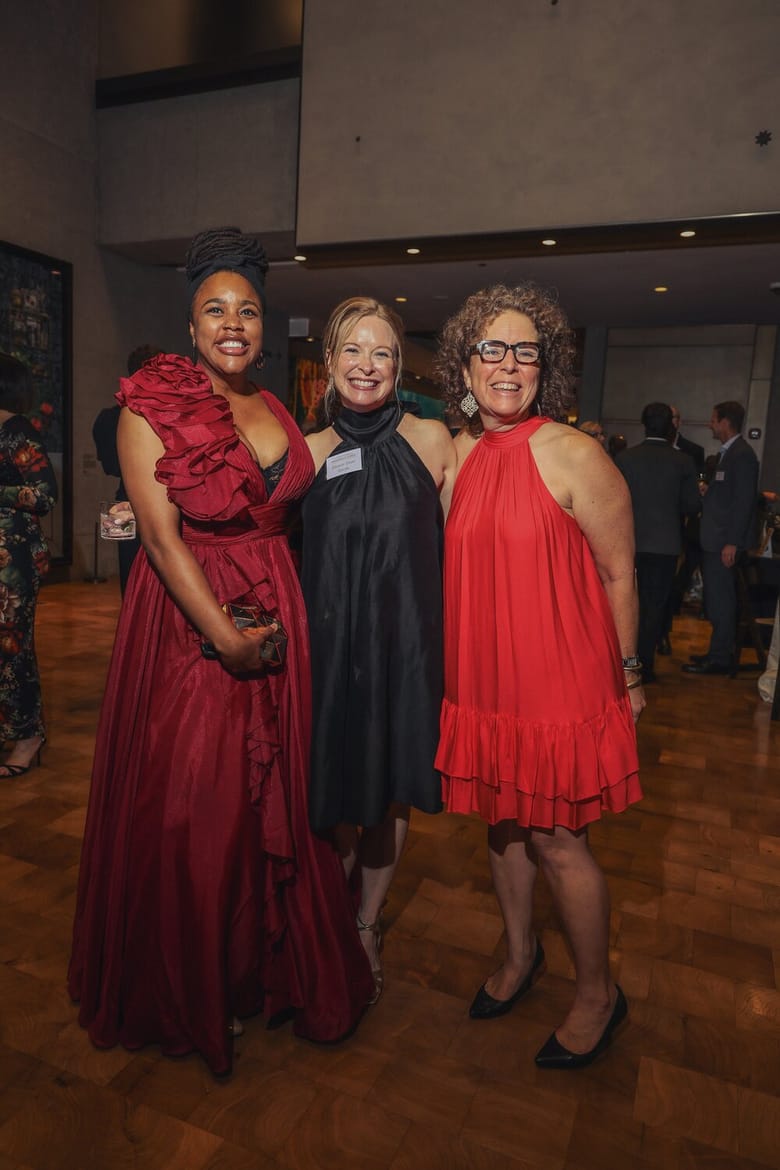
Lori Healey Rising Leader Award recipient Tiara Hughes, CAC CEO and President Eleanor Esser Gorski and Claire Rice, Executive Director of Arts Alliance Illinois, at Designing Futures 2026.
Sixty years ago, Congress passed the National Historic Preservation Act to protect our architectural and cultural history. Central to it is a fundamental policy: before federal dollars can be spent on a project that affects an historic place, agencies must pause, listen to the public and consider alternatives. That promise is called Section 106. It gives no one a veto and halts no development. It requires agencies to consult stakeholders and document trade-offs before landmarks are lost forever.
This summer, the Advisory Council on Historic Preservation, the federal body charged with keeping that promise, voted 16 to 5 to gut Section 106. The proposed American Affordability and Jobs Act, which dramatically reduces resources and requirements protected by Section 106, is up for a Senate vote on November 9. The rewrite, drafted by President Trump's appointees, is shortsighted and undemocratic. It would make consultation with local governments optional, where it is now mandatory. It would narrow the definition of "historic,” excluding any sites that are not "geographically compact" (goodbye Route 66 and the Appalachian Trail) and landscapes without "tangible human improvements" (read: natural landmarks sacred to tribal nations). And it would end the public comment period that makes place-keeping a collaboration among builders, agencies and engaged citizens. The likely impacts of these changes are intensified by the September introduction of the Bipartisan American Affordability and Jobs Act of 2026, which would make the dissolution of Section 106 federal law.
Why now? Last year, this administration-proposed new triumphal arch is in a protected view corridor between Arlington National Cemetery and the Lincoln Memorial. In September, the Advisory Council cut off public comment after three and a half business days, then terminated Section 106 review and let excavation begin. The approach will likely look similar if the government plans to demolish a National Historic Landmark, drill in a protected wildlife refuge, or run a highway overpass through an urban neighborhood.
The Chicago Architecture Center and Landmarks Illinois formed in the late 1960s and 1970s, respectively, in response to threats against our architectural legacy in the Urban Renewal era. We’ve built coalitions to guide development while protecting our landmarks. We know Section 106 review can occasionally be slow. We also know it results in better projects.
Take the CTA's Red Line, which runs through five historic districts. Section 106 consultation among the Federal Transit Administration, the Illinois State Historic Preservation Office and neighborhood groups shaped a $2 billion rebuilding of century-old tracks and stations, preserving neighborhood character while attracting economic development to reinvigorated transit hubs.
Or consider the Century and Consumers Buildings on State Street, rare surviving pre-World War I skyscrapers. After the federal government acquired them by eminent domain, Congress appropriated $52 million in 2022 to demolish them over security concerns at the adjacent Dirksen Courthouse. Section 106 required Washington to sit with Chicagoans to study reuse alternatives.
Then there are the 1932 Julia C. Lathrop Homes, among Chicago’s first federally funded public housing developments. Section 106 engagement among HUD, the Chicago Housing Authority and neighbors guided the transformation of a deteriorating campus into a mixed-income community with hundreds of restored apartments.
Each example produced a different outcome, and none was reachable without Section 106. Without these public discussions, we risk returning to the 1960s, a decade that galvanized the American preservation movement and gave us Section 106 in the first place.
Does the law need updates? Without question. The world has changed in 60 years, and so should our approach to preservation. Defending the status quo is easier than building consensus around something new, and we must rethink old policies and take bold steps to stay proactive for the next 60 years.
The door is open for reform because of the actions of this Advisory Council, this Congress and this Administration. But reform must be built in a public forum. It may come from new leadership with new thinking. Today, the proposed evisceration of Section 106 is not the answer and must be defeated. That will take sensible members of Congress shutting it down.
Otherwise, projects like the triumphal arch will arise as memorials to the loss of America's true and full history.

###
More Copy ###
2025 was a productive year for architecture and design in Chicago. A lot of long-term projects came to pass last year, including some against long odds. And there were many important planning wins for our city, all of which can deliver to us a meaningful foundation for the years ahead. So, let’s take a step back and look at the bigger picture of what 2025 brought us:
Several of Chicago’s most watched undeveloped tracts took big steps forward. We’ve been waiting more than a decade for this sort of news!
Body copy ###

Please contact Jorrie Jarrett with any questions or input on the content of this report.
