
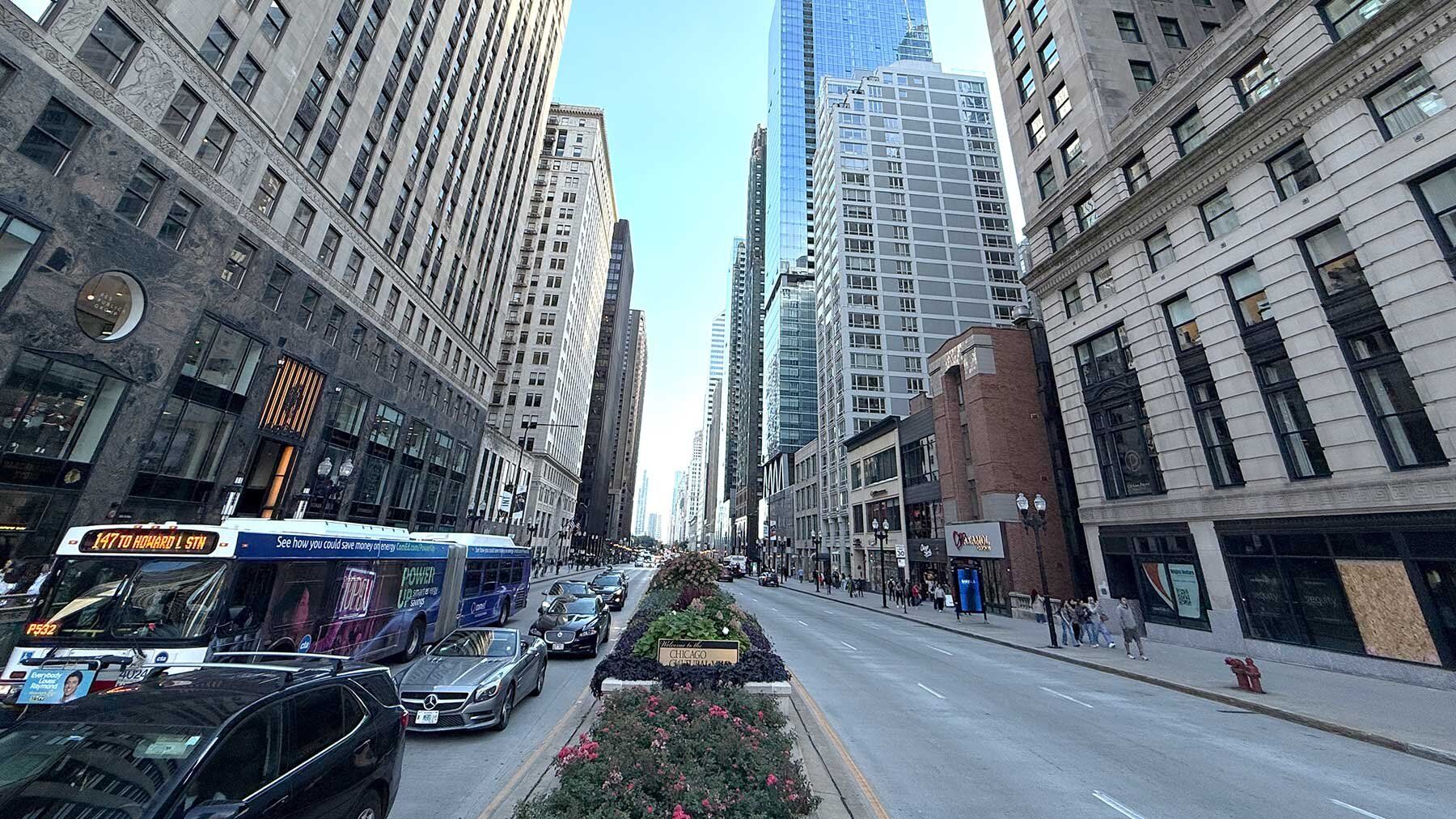
The Downtown Agenda
This is a part of CAC's Civic & Industry initiatives, connecting diverse voices to create a more equitable and well-designed Chicago.
This is a part of CAC's Civic & Industry initiatives, connecting diverse voices to create a more equitable and well-designed Chicago.
What does a 21st century downtown need to be?
Downtown Chicago is not returning to its pre-pandemic daily activity or economic value because it was optimized for patterns that have since changed: how people work, live, shop, and go out.
For generation upon generation, downtown Chicago has been the center of gravity for our city’s economy: the largest driver of regional output, the heart of the city’s tourism, the home of its major institutions, and the anchor of the property tax base that helps fund services across the city’s other 76 neighborhoods. That position is no longer secure; a downtown built for old patterns will keep losing ground to the new ones.
An underperforming downtown triggers a shift in the tax burden to homeowners and landlords in our outer neighborhoods, thereby threatening affordability.
For these reasons, the Chicago Architecture Center is convening a working group of civic leaders, business executives, architects, and urban planners to take a deeper look at the health and vitality of downtown. Ultimately, this group is wrestling with one question: What does a 21st century downtown need to be?
Drawing from research efforts by local architect teams, economists, public commentary, and dozens of interviews with subject matter experts worldwide, our working group seeks to produce a set of near-term policy recommendations by early 2027 with emphasis on spurring more human activity and more financial investment in the city’s historic core. The work rests on original economic modeling of downtown today: what is it worth now, what role does it play in the city’s fiscal health, and how it can shape the affordability of neighborhoods well beyond the Loop.
The Loop in the News
- *Editorial: Let's close the door on data centers in Loop's historic buildings | Chicago Tribune | August 10, 2026
- Chicago's downtown office pipeline at zero for the first time since 2012 | Bisnow | May 19, 2026
- Office buildings in Chicago sell for pennies on the dollar post-pandemic | Fox 32 Chicago | May 3, 2026
- *Downtown office buildings emptied out by the pandemic are being scooped up and refurbished with new amenities | *Chicago Tribune | April 7, 2026
(*Note: these articles require a paid subscription)
DOWNTOWN POLICY WORKING GROUP
Co-Chairs
- Keating Crown, Sterling Bay
- Colette English Dixon, Marshall Bennett Institute of Real Estate, Roosevelt University
Members
- David Baum, Baum Realty Group
- Shantay Bolton, Columbia College
- Lori Dimun, Driehaus Foundation
- Eleanor Esser Gorski*, Chicago Architecture Center
- Mark Hopkins, Chicago Central Area Committee
- Donna Lasinski, Chicago Cultural Stadium
- Rana Lee, Magrover Ventures
- Dan Lurie, Metropolitan Planning Council
- Marianne Markowitz, First Women’s Bank
- Suzet McKinney, Chicago Loop Alliance
- Cierine Nicolas*, ARUP
- Robert Rivkin*, United Airlines
- Jeff Shapack*, Shapack Partners
- Matthew Tully, Tully Associates
- Steven Vance, Cityscape
- Thomas Walstrum, Federal Reserve Bank of Chicago
ADVISORS TO THE WORKING GROUP
- Michael Fassnacht, Clayco
- Ari Glass, Mansueto Office
- Steve Koch, Bowline Group
- Samir Mayekar, Polsky Center for Entrepreneurship and Innovation, University of Chicago
ARCHITECTURE AND PLANNING RESEARCH TEAM
- Juan Betancur, Adrian Smith + Gordon Gill Architecture
- Sydney Brown, Skidmore, Owings & Merrill
- Yugene Cha, Krueck Sexton Partners
- Ryan Culligan, Skidmore, Owings & Merrill
- Thomas Hussey, Skidmore, Owings & Merrill
- Manisha Kaul, Krueck Sexton Partners
- Michael Schoemaker, Adrian Smith + Gordon Gill Architecture
- Marzia Sedino, Skidmore, Owings & Merrill
- Don Semple, Krueck Sexton Partners
- Mark Sexton, Krueck Sexton Partners
- Juan Villafañe, Krueck Sexton Partners
- Doug Voigt, Skidmore, Owings & Merrill
- Gabriel Wilcox, Krueck Sexton Partners
- Richard Wilson, Adrian Smith + Gordon Gill Architecture
ECONOMICS RESEARCH TEAM
- Nate Anderson, Federal Reserve Bank of Chicago
- Caelah Borkovec, Illinois Institute of Technology
- Michael Gregory, BMO Capital Markets
PROJECT LEADS
- Jeff Leitner, Leitner Insights
- Michael Wood, Chicago Architecture Center
* denotes Chicago Architecture Center Trustee
